

-
 $0 Callout. Fast Response
No hidden fees. On-site in 90 minutes in Rowville.
-
 Premium Roofing Materials Only
Top-quality Colorbond, terracotta, and more
-
 12-Year Workmanship Guarantee
Long-lasting results backed by a decade’s promise
-
 35+ Years Roofing Experience
Trusted experts delivering quality roofing since 1999

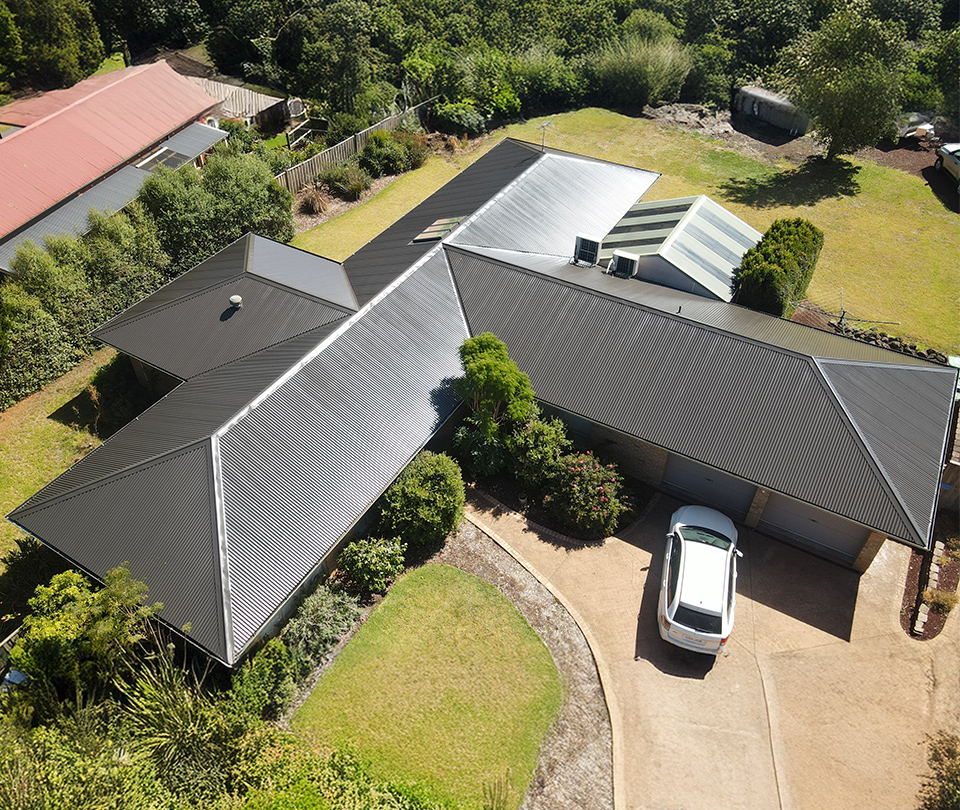
Roof Restoration Rowville: Repairs, Painting and the Terracotta That Decides It
Weathered terracotta can usually be reglazed rather than replaced. On a Rowville roof that is the difference between a restoration and a re-roof, and it comes up more than anything else, alongside ageing Colorbond. New Ridge Roofing has been doing terracotta restoration and metal roof work since 1999. Reglazing, repointing and resealing are three separate jobs, and most roof restoration work here needs more than one. Ring 0439 931 138 and a qualified roof tiler will get up there at no callout fee and tell you which yours needs.
Roof Repairs Rowville
The Rowville pattern is narrow: weathered terracotta, leaks after a storm, ageing Colorbond. What varies is which of the three is letting water in, and that decides whether you are booking an hour’s work or a morning’s.
On tile the leak is usually a slipped or cracked tile, or a valley that has stopped draining because debris has been left sitting in it. Those present the same way on a ceiling and are not the same problem. A slipped tile has moved out of its overlap, and reseating or replacing it closes the roof again. A blocked valley is worse, because the valley is the folded metal channel carrying water off two roof planes at once: pack it with wet leaf litter and water backs up sideways under the tiles either side, a far larger opening than any single tile offers. That is the leak owners describe as intermittent and impossible to find.
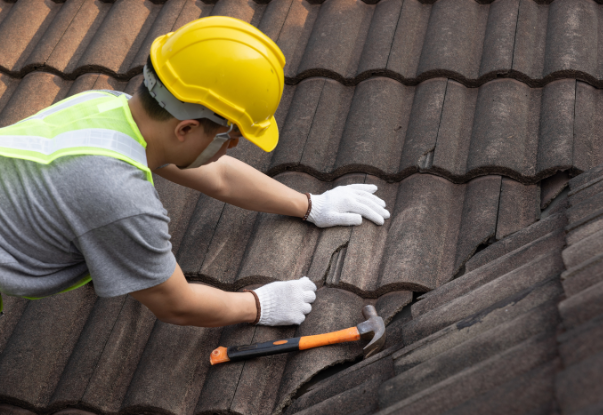
On older metal it is oxidisation, starting at the fixings and laps rather than mid-sheet, because that is where the coating was pierced and where water sits longest. Fasteners work loose as the sheet expands and contracts, the washer under the head perishes, and each one turns into a small hole with a rust ring around it. Treating back to sound steel and replacing the fixings is the repair.
Valley replacement and repointing stop a leak coming back rather than just stopping it today, which is why they get raised before a roof is near restoration. A repointed ridge line and a sound valley take the two most common entry points out of play.
Blocked gutters sit behind much of the rest. Garden trees along these streets keep loading them up, and a gutter that cannot clear itself keeps the roof edge wet.
The local expectation is a quote quickly rather than a wait, and anything actively letting water in is today’s job rather than next week’s. That work is roof repair rather than restoration.
Roof Painting Rowville
Fading is what brings most Rowville owners to a coating job, and what has failed differs between the two roof types, so one word covers two different jobs.
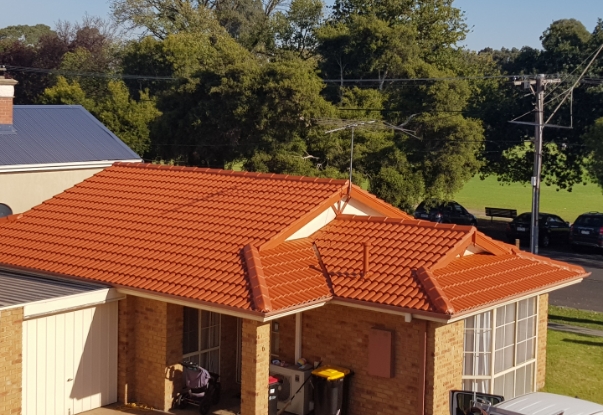
On terracotta the protective glaze has weathered off. The clay underneath is unchanged and will outlast everybody, but it is now exposed and porous, taking up water instead of shedding it. The flat, chalky colour from the driveway is the least important part: the tile has lost the surface keeping water out.
On Colorbond the paint film has chalked back and taken the protection with it. Chalking is the film breaking down into a fine powder that comes off on your hand, and once thinned the steel relies on whatever is left. Neither is fixed by colour over the top: a new film is only as good as its grip on what is beneath.
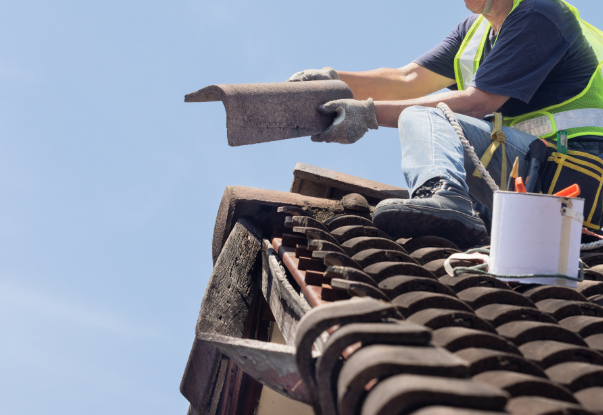
So the roof is cleaned down and repaired first: broken and slipped tiles replaced, ridge caps lifted, re-bedded and repointed flexibly, rust treated back to sound metal, loose fixings replaced. Then, only onto a dry sound surface, a sealer, glaze or coating goes on. Over damp tile or living moss it will not bond.
Under this much tree cover two things matter. The first is drying time: a roof shaded by garden trees takes longer to dry after the wash, and rushing that is the most common reason a coating fails early here, so a leafy block wants settled weather, not a gap between showers. The second is regrowth, since some coatings hold moss, algae and lichen back rather than cover them.
Owners often ask whether a fresh coating will make the house cooler. What it does first is seal a surface gone porous or chalked, the part worth spending on. Preparation and the coating itself are set out under the roof painting system.
Weathered Terracotta, and What Reglazing Does
Terracotta is fired clay with a protective surface on it. The clay lasts for generations. The surface does not.
Once it has gone, the tile is porous and gives moss and lichen somewhere to establish.
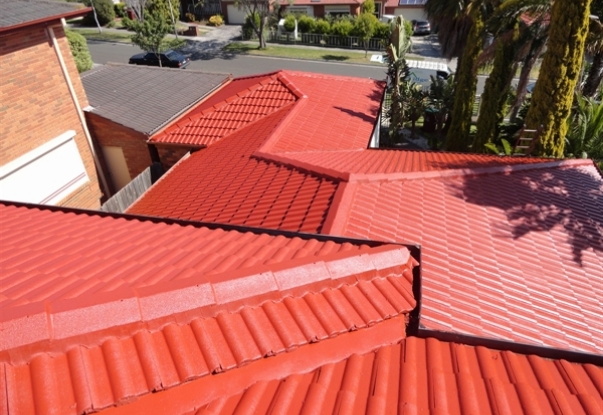
Reglazing puts a protective surface back, after the roof is cleaned down, broken and slipped tiles replaced, the ridge caps re-bedded and flexible pointing laid over the bedding. Only then does a glaze or seal coat go on.
Rowville has a long history of roof tile supply in the suburb itself, which matters when tiles crack during the work: older local profiles are often still findable in salvaged stock, so replacements disappear into the roof rather than announce themselves.
Ageing Colorbond, the Other Half of It
The other roof here is steel that has done twenty or thirty years and started to go.
On leafy streets it fails wherever debris has been left to sit. Caught while the film is only chalking, treatment back to sound metal, cleaning, priming and recoating brings the sheet back. Where corrosion has gone through, that run of sheet gets replaced rather than painted.
A couple of slipped tiles, one rusted flashing or a blocked downpipe on a sound roof is a repair, not a restoration. The same terracotta and Colorbond mix runs through the roofs around Knoxfield, the older stock at Ferntree Gully and the tiled homes up at Boronia.
New Ridge Roofing, and Why Terracotta Is Its Own Trade
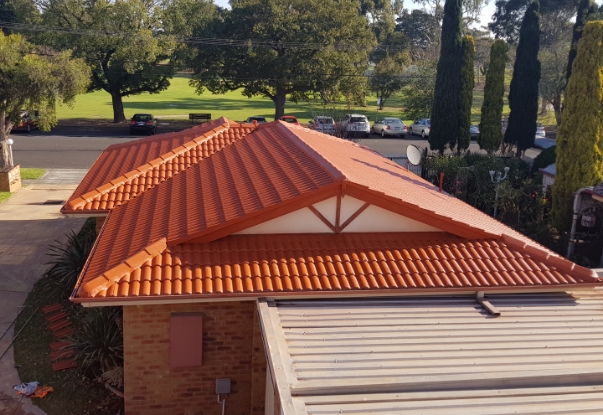
Clay is not concrete tile in a different colour: it is more brittle, breaks more readily underfoot, and sealing and glazing products behave differently. New Ridge Roofing has been Dean Manning’s family business since 1999, with 5000+ jobs completed across Melbourne’s south-eastern suburbs, and everyone on the tools is a qualified roof tiler.
The one who assesses your roof is one of the ones who will work on it. Full credentials and the restoration sequence are on the roof restoration service page.
Family business, trading since
Jobs completed across Melbourne's south-east
Google rating from 293 reviews
Year workmanship guarantee
Getting Someone Onto the Roof This Week
Ring 0439 931 138 or ask for a free quote through the site. The aim is a qualified roof tiler at your place within 90 minutes, with a $0 Callout Fee whether the work goes ahead or not.
What comes back is written and itemised: what the roof needs, what it does not, and what each part costs, with no obligation. What we quote is what you pay, with no hidden fees and nothing added once the job starts. Work can be staged, so anything letting water in is dealt with now and the painting or glazing booked to suit. Completed work carries a 12-Year Workmanship Guarantee, with a 10 Years Satisfaction Guarantee behind it.

Nothing to pay whether you proceed or not

A qualified roof tiler, not a sales rep

What we quote is what you pay

Urgent work now, colour when it suits
Four Signs You Have Moved Past Spot Repairs
Plenty of Rowville roofs only need a repair. You have crossed the line when more than one of these is true:
- Multiple broken tiles rather than one or two
- Leaks appearing in more than one place, or coming back after being patched
- Fading and cracking across the surface generally, rather than in a single spot
- Moss and lichen over large areas of the roof instead of one shaded corner
One on its own is usually a repair. Two or more and you are paying for access repeatedly to chase a roof at the end of its surface life, where a restoration becomes the cheaper decision.
Reglaze, Restore, or Replace?
Three answers, depending on whether the failure is in the surface, the mortar, or the material.
If the frame and battens are sound, the roof line is straight, and the tiles are whole or can be matched and swapped one at a time, the failure is surface and mortar. That is a restoration, with reglazing or resealing as the finish.
Replacement is the honest answer when the material itself has gone: cracks through the body of a tile rather than across the face, terracotta crazing and flaking apart in layers, sheet corroded right through, or timber gone soft after years of water getting in. Coat any of those and the money is spent twice. On a house spanning a couple of eras it is often mixed, and the sensible job is replacing the failed section and restoring the rest.
What a Rowville Roof Restoration Is Costed On
No square-metre rate survives contact with a real terracotta roof. What builds the number:
- Whether the terracotta is reglazed or resealed, and how much surface is sound enough to take it
- How many tiles are broken or slipped, and whether matching stock exists for the profile
- How much bedding under the ridge caps comes out and is relaid with flexible pointing
- How far rust has gone on any Colorbond, and whether sheet must be cut out
- How much moss and lichen has to be cleaned back, and how long the roof needs to dry
- Roof size and pitch, single or double storey, and how access is managed
- Whether gutters are in scope, and whether painting happens now or later
The inspection and the itemised written quote cost nothing and carry no obligation.
Five Questions on Terracotta and Colorbond
In most cases, yes, and it is why a terracotta roof that looks finished from the driveway often is not. What decides it is the clay, not the colour. Whole tiles on a sound frame take a new surface; tiles crazing and flaking apart in layers do not.
On a sound frame it is better on every measure: it costs a fraction, takes days rather than weeks, and keeps a roof that fits the house. The mistake worth avoiding is paying for a re-roof because a surface wore out.
Any time the roof can be got dry, so the job is easier through the warmer months and slower through winter. The failures that let water in do not wait for a season, though, and a leak found in June is cheaper in June than after another three months of it.
Almost always a repaint. Faded, chalky colour means the paint film has broken down, a surface problem on sheet that is otherwise intact. Treated, primed and recoated, it is good for years. A re-roof is for sheet corroded through, which shows at the fixings and laps, not in the colour.
The condition of the surface and how many tiles have to be found and replaced, more than the size of the house. Two identical footprints can be far apart once you count broken tiles, bedding and growth. That is why the look happens before the number.
Glaze Goes Long Before the Tile Does
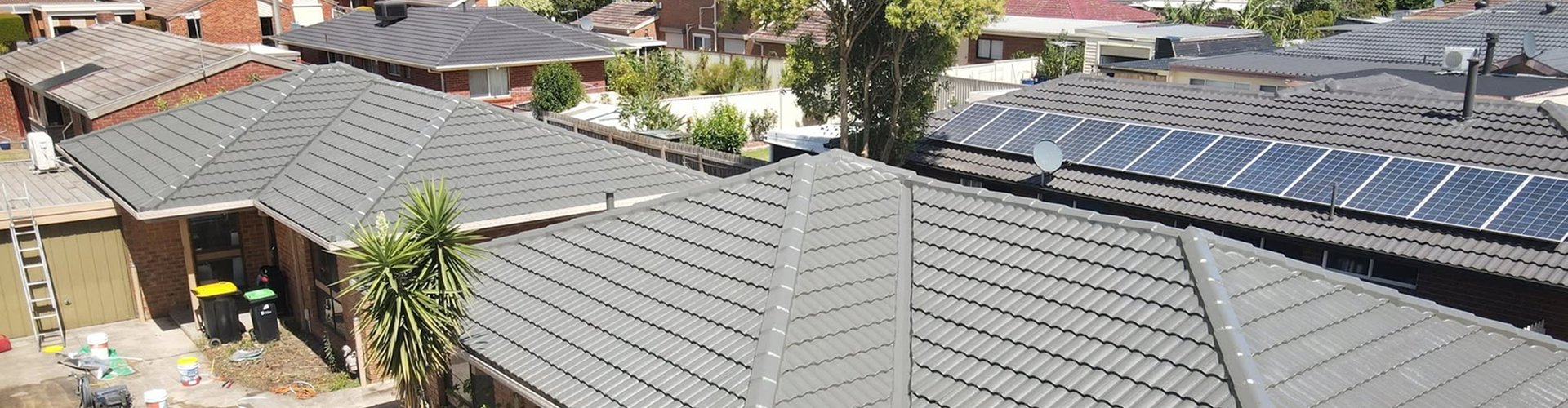
A terracotta roof loses its surface decades before it loses its clay, and almost every one gets condemned somewhere in between.
Somewhere between those two points is where yours actually sits, and finding out is a free inspection rather than a guess. Book it on 0439 931 138 or by quote request.