

-
 $0 Callout. Fast Response
No hidden fees. On-site in 90 minutes in Moorabbin.
-
 Premium Roofing Materials Only
Top-quality Colorbond, terracotta, and more
-
 12-Year Workmanship Guarantee
Long-lasting results backed by a decade’s promise
-
 35+ Years Roofing Experience
Trusted experts delivering quality roofing since 1999

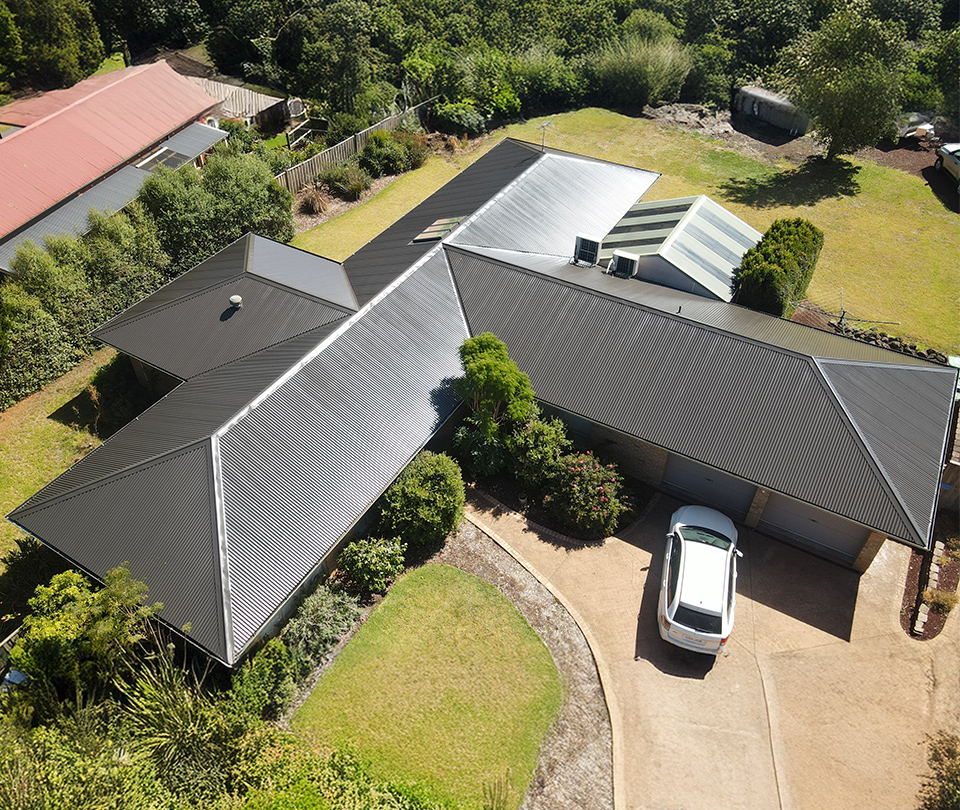
Roof Restoration Moorabbin for Repairs and Painting Where Flat Meets Pitched
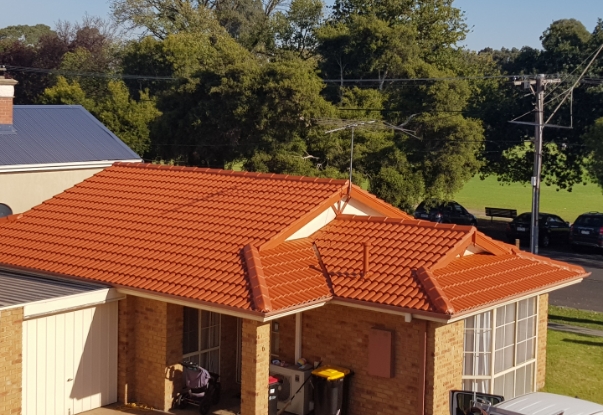
Two roofs on one house, and the trouble is nearly always where they join. Many Moorabbin properties carry pitched cement or terracotta tile over the original house and flat metal over a rear extension or garage. New Ridge Roofing has worked on that combination since 1999, and a restoration here starts by settling whether water enters through the tile, the sheet or the joint. Leaks, vermin and stale roof-space air all trace back to the same few metres. Ring 0439 931 138 and a qualified roof tiler will look at all three, at no callout fee.
Roof Repairs Moorabbin
A lot of what gets called in here is one fault on a roof that is otherwise fine, and heavy rain shows it up. The calls follow the two roof types most Moorabbin properties share.
On the flat and low-pitch metal sections it is rust, almost always at a lap or a fixing rather than in the open field of the sheet. A low-pitch roof sheds slowly, so water sits longest where two sheets overlap or where a fastener has pierced the coating, and older sheeting has less protection left. Caught early it is a treat-and-recoat job. Caught late it is a section of sheet cut out and replaced.
On the terracotta and cement tile it is the mortar and the growth. Valley mortar breaks up first, because the valley carries more water than anything else. Moss holds damp along the shaded runs and keeps the tile wet long after the weather clears, which turns a surface problem into a leak. Ridge caps go the same way: the bedding cracks, the pointing lets go, and the next strong wind lifts a cap.

Telling the two apart from inside is easier than it sounds. A stain that appears soon after rain starts and dries between falls is a direct path, a gap or a failed lap. A stain still spreading a day afterwards was held first, in packed debris, a blocked valley or against moss, and released slowly. The second kind takes longer to find and does the damage.
The gaps letting birds and vermin into the roof space are the same broken tiles and lifted caps seen from a different angle. Ventilation is worth ruling out at the same time.
Each of these is targeted roof repair work on a sound roof, and should be quoted that way rather than folded into a job you do not need. The time to look is while the fault is still one fault.
Roof Painting Moorabbin
Painting is the last stage here, and on a Moorabbin property it covers two very different surfaces.
Cement tile is worth understanding, because it is the most common here. A cement tile is not waterproof in itself: it is given a coating when made, and that coating is what makes it shed water. Weather it off and the tile becomes porous, stays damp for days after rain, and gives moss somewhere permanent to live. Sealing and then painting puts a shedding surface back, which is why a repaint on porous tile does more for the roof than for the photographs.
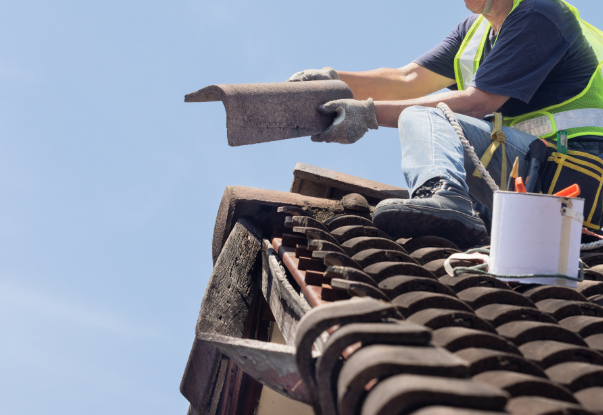
The flat and low-pitch metal sections want the opposite treatment. Chalking and surface rust get taken back and the sheet primed before any colour, because a coating over corrosion traps it rather than stopping it.
Whether the new coating peels, cracks or fades depends almost entirely on what happened before it went on. Colour over a chalked film bonds to the chalk; colour over an unsealed tile sits on a surface that keeps getting wet from underneath; colour over rust lifts. Preparation is where the time goes on an honest quote, and usually the whole difference between two prices on the same roof.
There is a point at which paint is the wrong answer. Flaking coating alongside rust, an active leak or soft, wet timber means a problem underneath that painting would only cover. Those get dealt with first.
Not every roof around here is a house. Offices, warehouses and strata buildings share the suburb, and a large low-pitch roof follows the same rules with more area and standing water to allow for.
What the coating goes over, and in what order, is set out on the roof painting page.
Where the Flat Section Meets the Tile
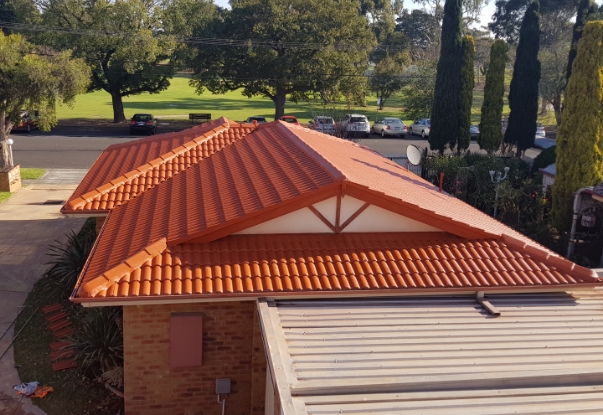
A low-pitch metal roof sheds slowly, a tiled roof fast. Put them together and the junction copes with everything the tiles send down, where the fall runs out.
Three things go wrong there. The flashing lapping the sheet under the bottom course of tiles perishes long before either roof does, and water tracks back under the sheet. Debris collects in the change of pitch, the one place nothing washes through, and holds moisture against the metal until it rusts. And the fall flattens as the structure settles, so water that used to run now ponds.
None of it is visible from the ground, which is why a leak in a back room often has nothing to do with that room. The fix is usually straightforward once found: flashing renewed, junction cleared and resealed, rusted sheet cut back to sound metal.
Birds, Vermin and the Gaps They Find
Pest damage comes up as often as leaks, and the two are the same story.
Anything that gets in came through a gap, and the gaps are predictable: a slipped or broken tile, a lifted ridge cap, an unsealed eave line, or the open end of a flat metal section. The damage is rarely structural: torn sarking, fouled insulation, occasionally chewed wiring.
Closing it off is roof work, not pest work. Broken tiles get replaced, the ridge line re-bedded and pointed, and open sheet ends closed. Done during a restoration it costs almost nothing extra, because the crew is already up there with the caps off.
New Ridge Roofing, and the Two Trades One Roof Needs
Tile and metal are different trades, and a property with both wants someone who does not sub one out. New Ridge Roofing is Dean Manning’s family business, trading since 1999, with 5000+ jobs completed across Melbourne’s south-eastern suburbs, and everyone who goes up on the roof is a qualified roof tiler. Full credentials and the restoration sequence are on the roof restoration service page.
Family business, trading since
Jobs completed across Melbourne's south-east
Google rating from 293 reviews
Year workmanship guarantee
Who Comes Out, and What You Get in Writing
Ring 0439 931 138 or ask for a free quote through the site. The aim is a qualified roof tiler at the property within 90 minutes, at a $0 Callout Fee, and whoever reads the roof is one of the people who does the work.
The quote comes back written and itemised, with no obligation. What we quote is what you pay, no hidden fees and nothing added once the job starts. Anything letting water in can be done first, painting booked for later. Completed work carries a 12-Year Workmanship Guarantee and a 10 Years Satisfaction Guarantee.

Nothing to pay whether you proceed or not

A qualified roof tiler, not a sales rep

What we quote is what you pay

Urgent work now, colour when it suits
A Roof Space That Cannot Breathe
Poor ventilation shortens the life of everything above and below it.
Warm, damp air rises out of the house and, with nowhere to go, condenses under the roof through winter. That keeps the battens and sarking damp, encourages mould in the insulation, and on a metal section drips back down as though the roof were leaking, which people chase for a season before anyone checks the airflow.
The remedy is inlet at the eaves and outlet up high, so air moves through. Vents go in during a restoration while the crew is already on the roof.
Does a Roof Restoration Need Council Approval in Moorabbin?
It depends on the scope of the work, so there is no single answer worth quoting.
Minor roof repairs sit at one end. Structural changes, a full replacement and some restoration work sit at the other, where approval may come into it. Moorabbin sits in the City of Kingston, and Kingston confirms it for your address, not a roofing company.
We give you the written scope first, so you know what is proposed before you ask.
How Far Gone Is Too Far Gone?
Restoration works when the failure is in the surface and the mortar. Replacement is for when the material has gone.
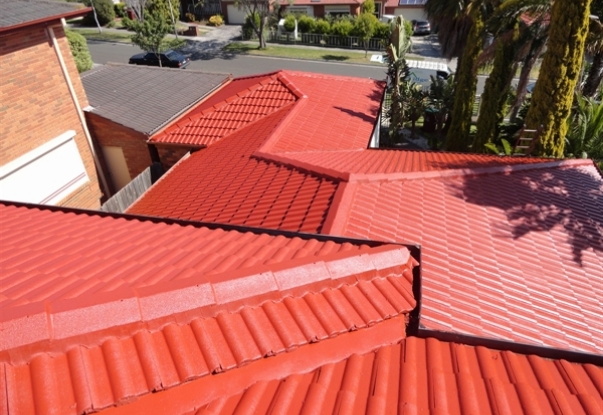
If the frame and battens are sound, the roof line is straight, and the tiles can be matched one at a time, the roof is restorable. Broken tiles come out, the ridge caps are lifted and re-bedded, flexible pointing goes over the bedding so the mortar line moves with the roof, and the surface is cleaned, sealed and coated.
The honest calls for replacement are narrower: tiles cracking through the body rather than across the face, sheeting perforated at the laps and fixings, or battens gone soft behind a bad junction. Where a property is part sound and part gone, replacing the failed section and restoring the rest is sensible.
What Affects the Cost of a Moorabbin Roof Restoration
There is no rate that survives a house carrying two roof types. What builds the number:
- Whether there is a flat metal section as well as pitched tile, and how much the junction needs, which moves a Moorabbin quote most
- Roof size and pitch, single or double storey, and access
- What the tiles are, cement or terracotta, and the surface condition
- How much bedding under the ridge caps has to be laid again
- How many tiles are broken, and whether the profile can be matched
- How far rust has travelled, and whether a run has to be cut out
- Whether ventilation, gutters or valleys are in scope, and whether painting happens now or later
The assessment and the itemised written quote cost nothing.
What Moorabbin Owners Ask
Not a figure anyone can give honestly before seeing the roof. The written quote is itemised so you can see where each part of the money goes, and the look costs nothing.
Usually restored. Faded, chalky colour and surface rust are a paint film that has broken down on otherwise sound sheeting, and washing, treating, priming and recoating brings it back. Replacement is for sheet corroded through.
Worth checking the junction between the flat and pitched sections, and ruling out condensation before anyone opens a ceiling. Both produce the same stain and are fixed differently.
No, but together is usually cheaper. Two scopes on one set-up means access is paid for once, and avoids a freshly coated tile roof draining onto a section left as it was.
Two Roofs, One Set of Answers
Almost every difficult Moorabbin leak lives in the last metre of the tile line rather than where the stain appears.
Which means the place to start looking is the join, and that is a booking rather than a phone diagnosis. 0439 931 138, or a free quote request if you would rather not ring. The same tile and metal mix runs through the bayside homes at Brighton and the older tiled stock at Aspendale.